When your child goes to school it’s very easy as a parent to become anxious. Will they work hard, will they do well? Will they pay attention in class? At the end of the day, there are so many things that influence a child’s progress in school that you are never going to have a perfect satisfactory answer to this, but there is a lot that you can do as a parent to help your child to succeed.
Remember first of all, that you are your child’s first and most significant teacher. Children perform better and feel better going to school when parents take an active interest in their education. Research also indicates that parental education and family income have less impact on a child’s academic achievement than family actions. Fortunately, you can help your kids learn both at home and throughout the academic year in a variety of ways. Here are a few you can consider.

Get to know your child’s teacher personally
If you have any specific concerns, make an effort to schedule a meeting with your child’s teacher as soon as you can. Inform the teacher that you wish to support your child’s education. Make it known that you want to hear from them when your child has issues. Establishing a partnership with your child’s teacher may be greatly aided by conversing with them.
Get a realistic view of where your child is with regards to his classmates
The first thing I would say to every worried parent is to be realistic about what children of a particular age are supposed to be able to do . When a child first starts in Reception year, many parents are worriesd that they are not picking up reading and writing quickly enough, but there is a wide spectrum of aptitude at that age. Some are good at reading, others at counting and doing maths, others enjoy creative pursuits and others enjoy sport more.
If you have a full and frank conversation with your child’s teacher, you may find out that what you consider to be ‘falling behind’ is actually normal and theat your child does not have any real problems at all.
For myself, I had a daughter, who was very advanced for her age, in speaking, reading and later on writing. Then two years lateer I had a son in the same school who took a little bit longer than her to reach some of the same milestones and I did worry a bit. But even he was considered to be in the top third of his class – he verh much preferred Maths and wasn’t much interested in reading and writing. I was worried, but there really was no need to be. they are both at thier first choice universities now and doing fine.
Seek extra help for your child if they need it
If your teacher agrees with your concerns that your child is struggling in a subject, then you can hep them with extra work outside of school time. External tutors are available for children from a very young age, and you can also buy materials and make time to work with them them if you have knowledge of the subjects they struggle with. For the more academically able, you can sign your children up for extra classes such as 11+ tuition courses to supplement the lessons they receive in school. This will help your child get the help they require to improve their academics. You can also make time to work with them them if you have the time and knowledge of the subjects they struggle with.

Take an interest in your child’s homework
Let your kids know that you value education by taking an active interest in their homework, and helping then to get it done on time. As a tip, establish a dedicated study space, design a certain time for homework, and avoid distractions like social media and television during homework time. Perhaps you are reluctant to assist your child with homework because you believe you do not know enough about the subject. In that case, you can still assist your child in organising their belongings, providing the required materials, asking your child about their daily assignments, keeping an eye on their work to ensure it is finished, and expressing gratitude for all of their efforts. Remember that doing your child’s homework for them won’t help them in the long term.
Help your child prepare for exams
As your child gets older they will have to start to sit exams, and tests. as a parent you can help your child by fiding out the kinds of tests and exams that they are taking, and the likely content and format. It is possible to learn study and exam techniques to improve your chances in exams. If you child is not beig taught that in school then you can help them to learn how to study in an organised way.
Let your child know that you have a positive outlook on learning
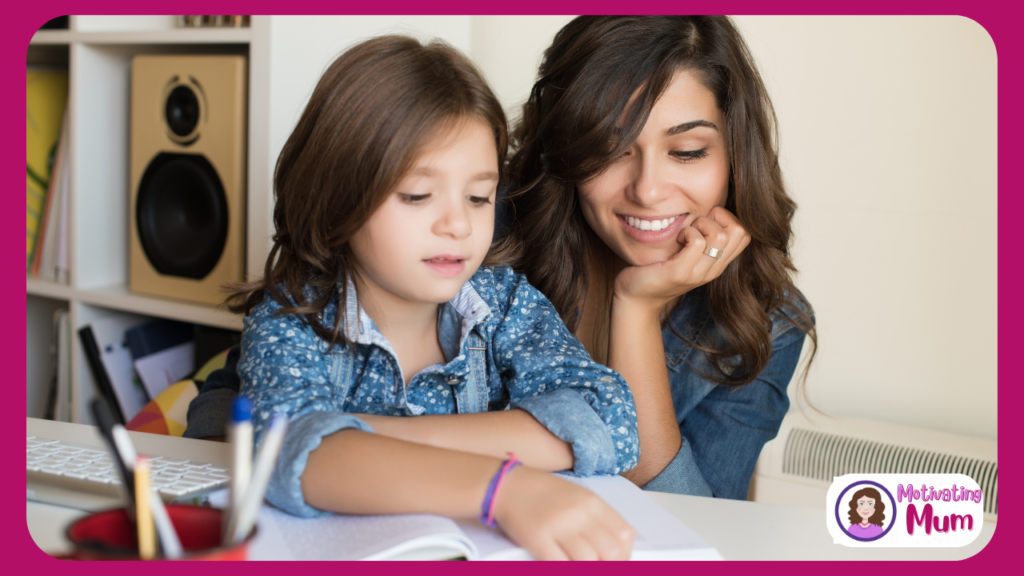
Your everyday actions and words foster a good outlook on education and learning and self-assurance in their ability to learn. Giving your children the impression that you respect education and apply it to your everyday life sets a positive example for them and helps them succeed in school. Furthermore, parents and families may ignite their children’s excitement and help them grasp a crucial lesson- that studying can be rewarding and pleasurable and is well worth the work required – by demonstrating an interest in their education.
Talk to your child
Talking and listening are important for children to succeed in school. Young children learn the language and skills they will need to succeed by listening to and reacting to their parents and other family members. For instance, children who are not encouraged to communicate and do not hear much discussion themselves sometimes struggle to learn how to read, which can cause additional issues in the classroom. Furthermore, those who have not mastered attentive listening frequently struggle to follow instructions and focus in class. When your child does speak up and make a piont, make sure to give them full attention and have a discussion wherever possible rather than just telling them things.
Participate in parents evenings
Each year, schools typically host one or sometimes more parents evenings. This is a great opportunity to discuss your child’s strengths and weaknesses, and to figure out where inntervention might be needed
Above all the main thing to do is not to worry. Most children will develop at their own pace, and most will show an aptitude or an interest in one or more things as they grow older. We are all different and we don’t all have to be good at the same things. Once you find out what your child’s interests, aprtiudes and passions arem, then nurture and appreciate them.
Here are some more posts you may enjoy: